How to Pack Fragile Items So Nothing Breaks
Almost every broken plate we have ever seen shared the same cause. It was not the truck, the road, or bad luck. It was a box that let things move. A dish that can shift inside a carton will find the one hard surface next to it, and over a bumpy drive across town it taps that surface a few hundred times. That is what cracks it.
Packing fragile items well comes down to one idea: nothing breakable should be able to touch anything hard, including another breakable. Get that right and a plate can ride from the South Hill to Mead without a scratch. Below is how we actually do it, item by item, using the same steps our crews use on real jobs.
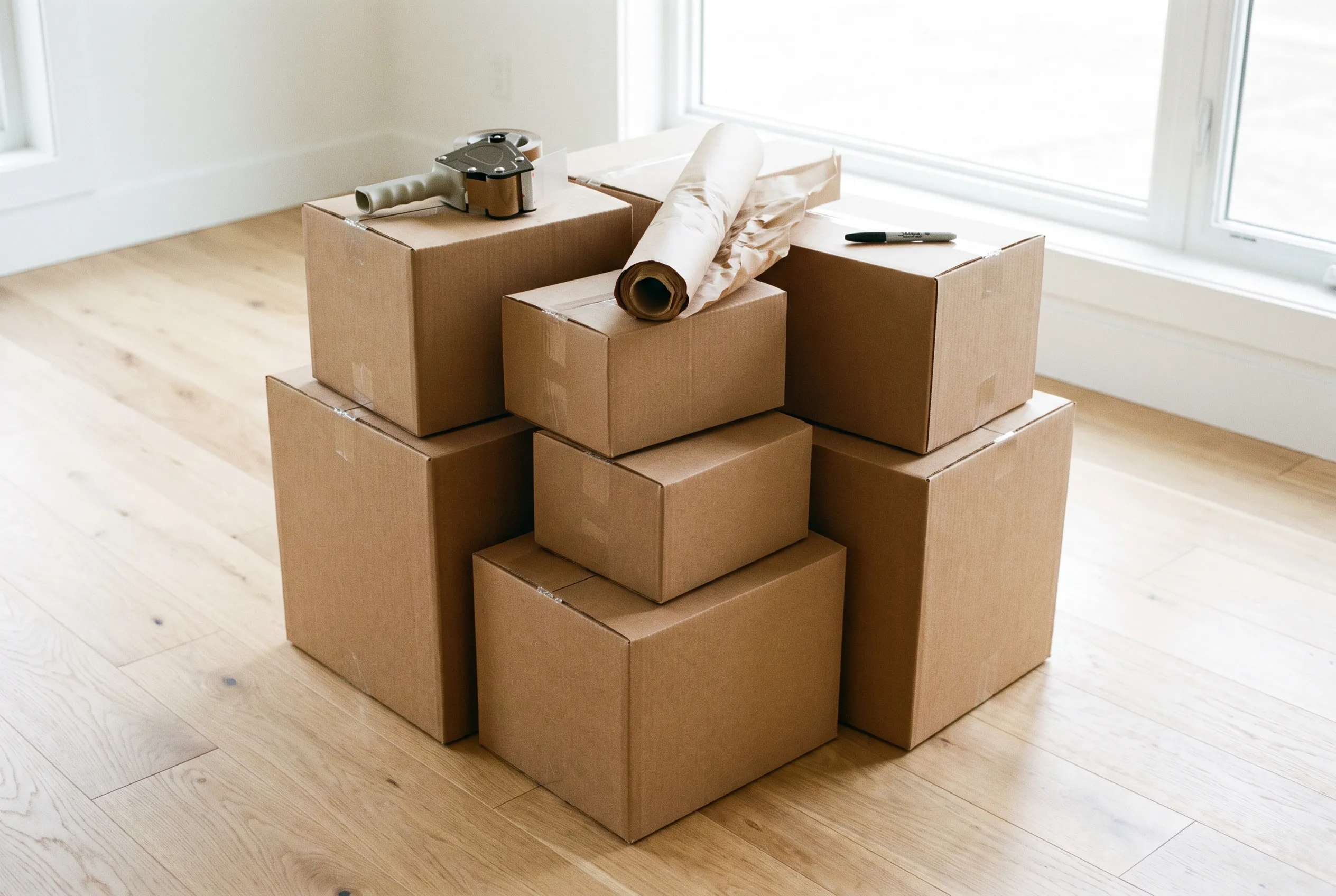
Start with the right supplies
You cannot wrap glass in good intentions. Before you touch a single dish, gather materials that are made for the job. Newspaper is tempting because it is free, but the ink transfers onto dishes and the paper is thin. Use it only as an outer filler, never against a clean surface.
Here is what each material is actually for:
| Material | What it protects best |
|---|---|
| Packing paper (unprinted newsprint) | Wrapping individual dishes, glasses, and small items |
| Small dish-pack (double-wall) boxes | Anything heavy or breakable, so the box walls do not blow out |
| Bubble wrap | Electronics, framed art, and irregular shapes |
| Foam pouches or corner protectors | Stemware, screens, and sharp corners |
| Cell dividers (glass kits) | Keeping glasses and mugs separated inside one box |
| Strong tape | A double-taped bottom seam on every box |
If you would rather not buy and guess, we keep the right sizes in stock. Our packing supplies include the double-wall dish boxes and cell kits that most hardware stores do not carry, which are the two things that matter most for fragile loads.
The universal wrapping method
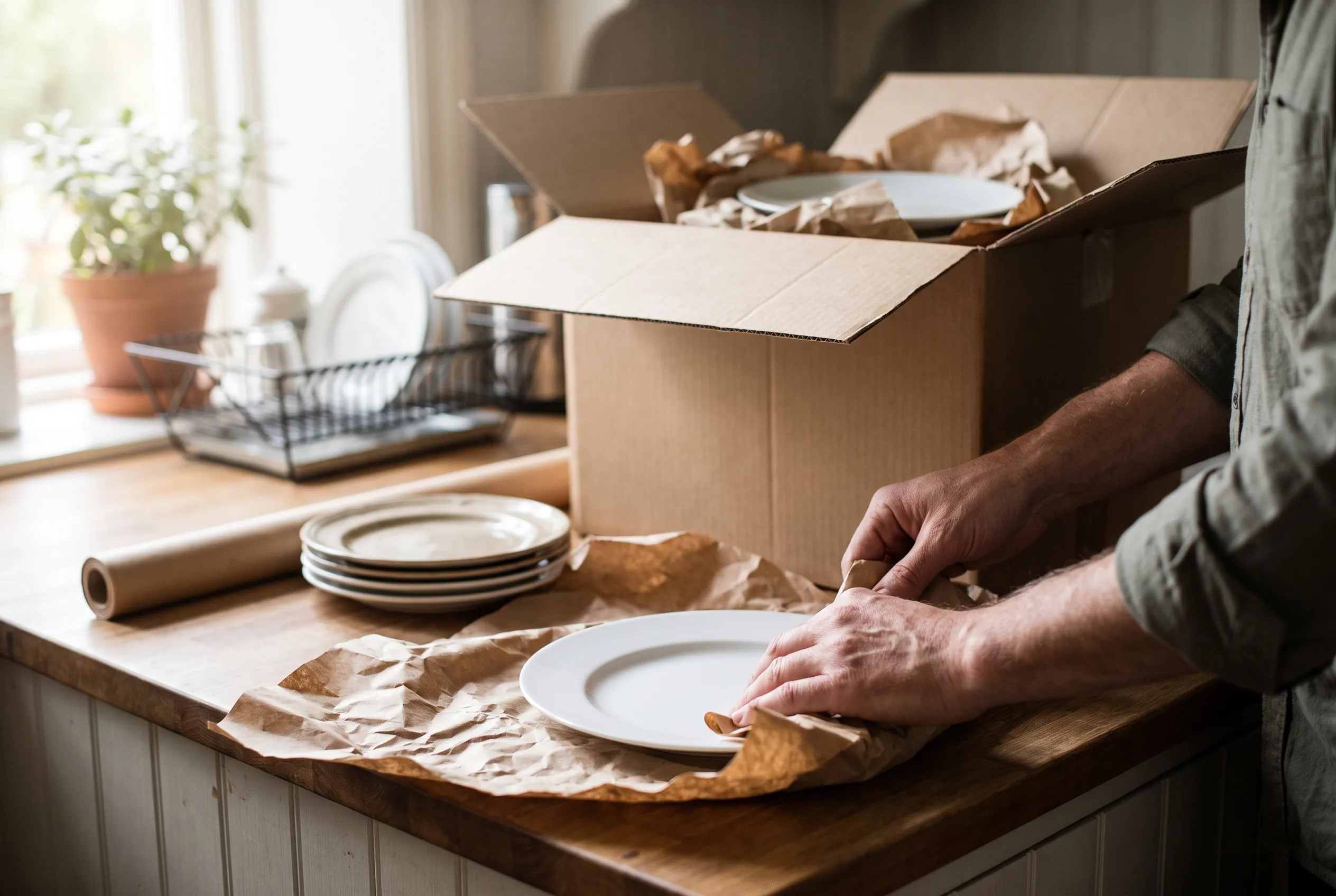
Most breakables get wrapped the same basic way, and once it is muscle memory you will move fast.
- Lay two or three sheets of packing paper flat on the table.
- Set the item in one corner, at an angle.
- Roll it toward the far corner, folding the side flaps in as you go so the whole surface gets covered.
- Tape the bundle closed, or tuck the end so it does not unroll.
- For anything hollow, like a vase or a mug, crumple a sheet of paper and stuff the inside first so the walls have support.
The goal is a soft, rounded package with no bare edges poking out. When you set it in a box, it should feel padded on every side.
Dishes and bowls
Plates are strongest on their edge, weakest on their face. So they never lay flat in a box. Wrap each plate individually, then stand them on end, like records in a crate, packed snugly against each other with a wall of crumpled paper on both sides. A dish box packed this way can hold a surprising amount of weight without a single crack.
Bowls nest, which saves space, but put a sheet of paper between each one so they do not fuse or chip on the rims. Fill the empty center of the stack with crumpled paper before you wrap the whole nest as a single bundle.
Glasses and stemware
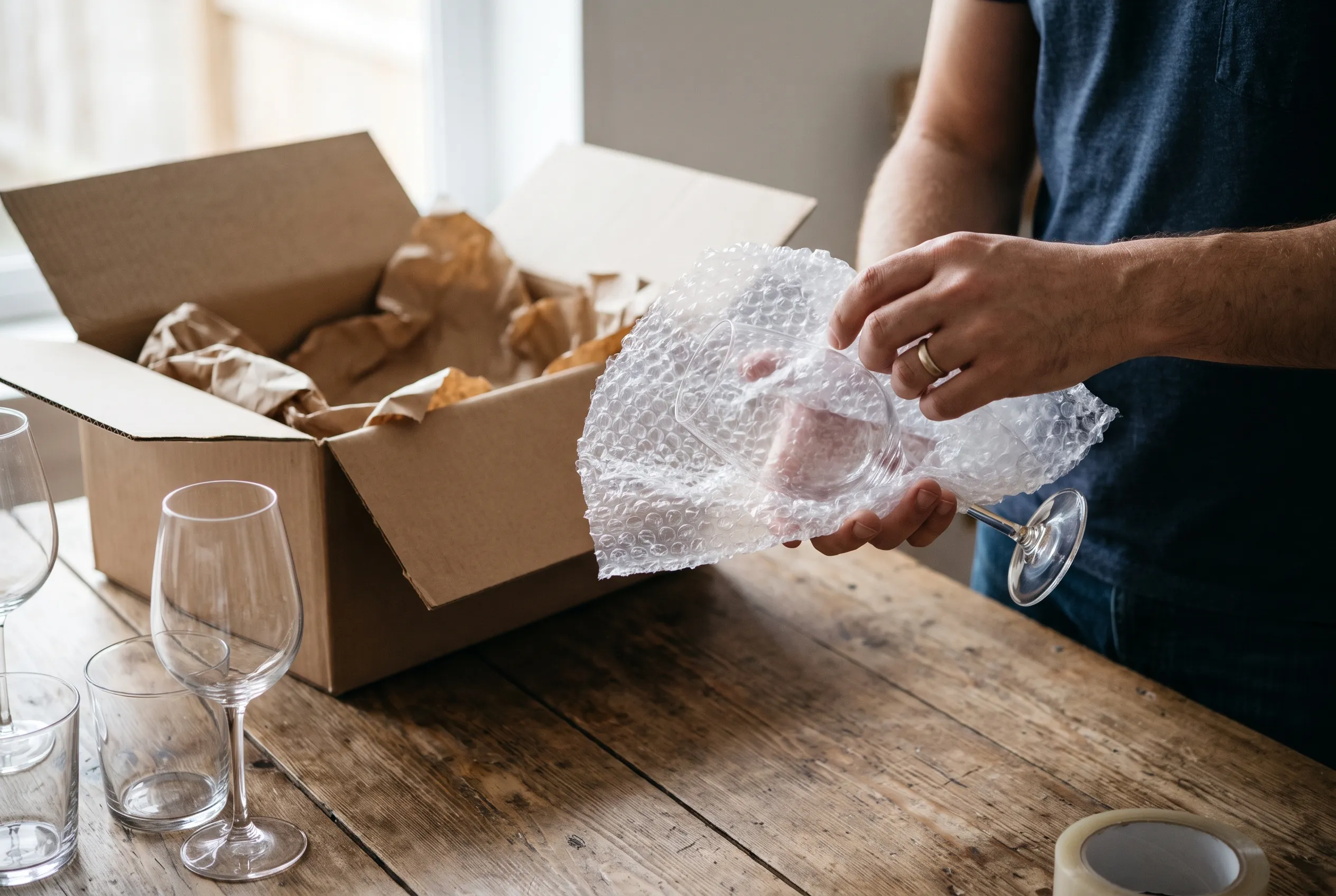
These are the ones people lose most. Stuff each glass with a small piece of paper, then wrap the outside. For wine glasses and anything with a thin stem, wrap the stem separately with a little extra padding before you wrap the bowl of the glass, because the stem is the snap point.
Use a box with cell dividers so no two glasses share a wall. Stand them upright, never on their sides, and add a thick layer of crumpled paper across the top before you close the lid. Then do the shake test.
The shake test
Before you tape any fragile box shut, close the flaps and give it a gentle shake. If you hear or feel anything move, open it back up and add more paper until it goes silent. A box that does not rattle is a box that arrives whole. This single habit prevents more breakage than any premium material you can buy.
Picture frames, mirrors, and glass tops
For glass that is already flat, tape a large X across the face with painter’s tape. It will not stop a hard hit, but it holds the pieces together if the glass does crack, which keeps a small problem from becoming a dangerous one. Wrap the piece in bubble wrap, add corner protectors, and stand it upright between two mattresses or against a padded wall of the truck. Flat glass laid down and stacked is asking to be sat on.
Electronics and screens
TVs, monitors, and computers hate two things: pressure on the screen and static. If you kept the original box, use it. If not, wrap the screen in a soft blanket or foam sheet first, then bubble wrap, and stand it upright. Photograph the cable connections on the back with your phone before you unplug anything, so setup at the new place takes minutes instead of an evening.
Heirlooms, antiques, and the truly irreplaceable
Some things are not really about the packing. A grandmother’s china, a signed piece, an antique clock. If it cannot be replaced, it deserves more than a rushed wrap the night before. Give these items their own small boxes, double-wrapped, clearly marked, and hand-carried in your own vehicle when it makes sense.
Pianos and specialty pieces are their own category. A piano is not a heavy box, it is a precision instrument on wheels, and moving one safely takes equipment and technique most people do not have at home. If you have one, read our guide on how to move a piano first, then let a trained crew handle the actual lift.
Label, load, and stack smart
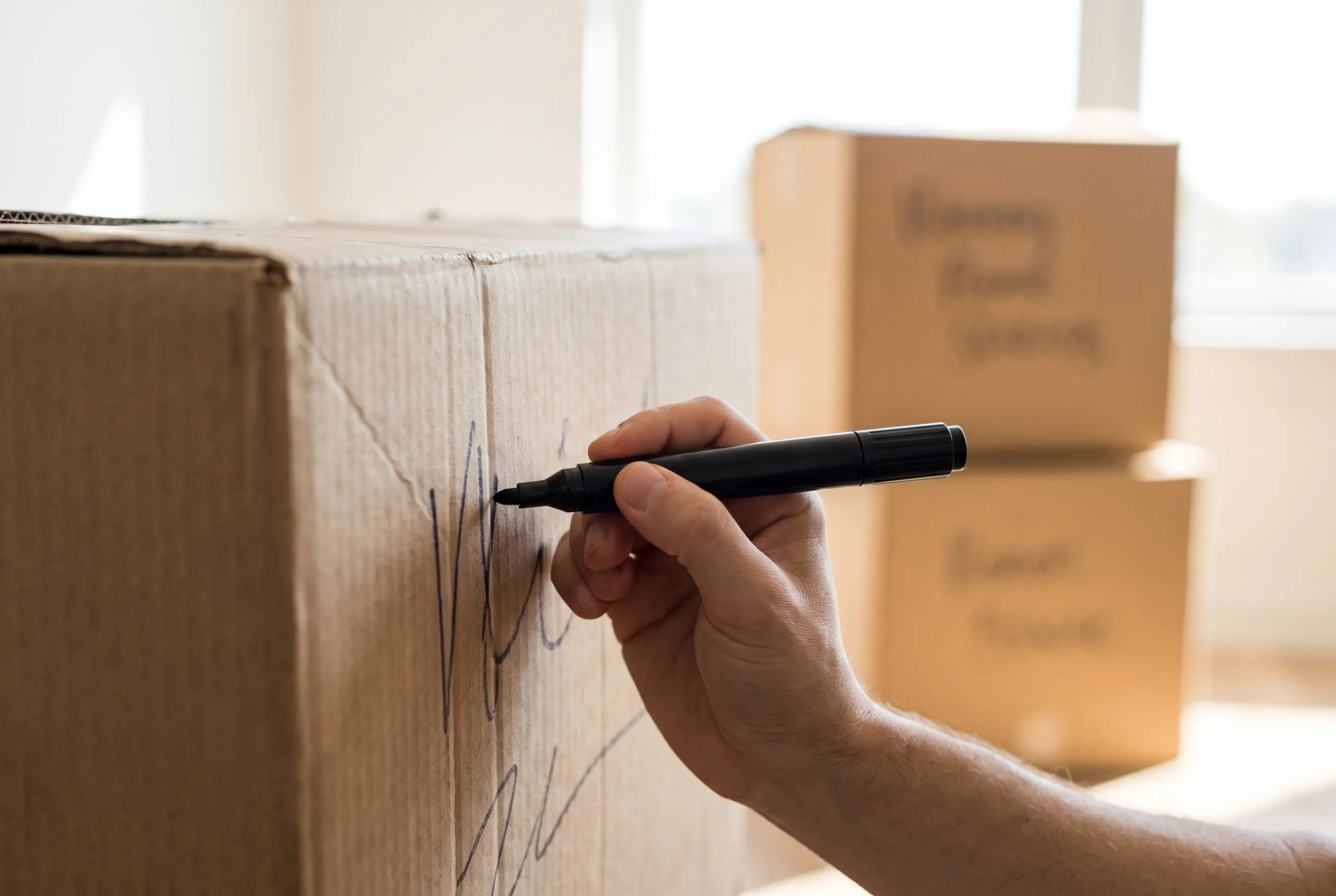
A fragile box is only as safe as the boxes stacked on top of it. So mark every fragile carton clearly on the top and at least two sides, note which way is up, and write the room it belongs in. When it goes on the truck, fragile boxes ride on top of the heavy solid ones, never underneath. Fill any empty space inside a box so it cannot collapse when something is set on it.
The kitchen is usually the hardest room in the house to pack because it is all dishes, glass, and awkward shapes at once. If that is where you are stuck, our room-by-room walkthrough on how to pack a kitchen breaks it down cabinet by cabinet.
When to hand it off
There is no shame in deciding you would rather not spend three evenings wrapping stemware. Careful packing takes real time, and one broken heirloom costs more than the packing would have. When our crew handles the packing service, we bring the materials, wrap everything to these standards, and load it onto your own dedicated truck with the same team from start to finish. Nothing is mixed with another household’s load.
If you are planning a move anywhere around Spokane and want a clear, upfront price with no hidden fees, reach out for a free quote or call us at (509) 862-4968. Whether you pack it yourself or leave it to us, the goal is the same. Everything arrives exactly the way it left.
Planning a move in the Spokane area?
Get a free, no-obligation quote from a licensed local crew.