Moving Boxes and Supplies: What You Need and How Many
Walk into any hardware store the week before a move and you will find a wall of boxes in five sizes, three grades of tape, and a dozen things you are not sure you need. It is easy to overbuy, and just as easy to run out of medium boxes at 9 p.m. the night before the truck comes. So let us cut through it. Here is what actually matters, what you can skip, and a simple way to guess how many boxes your home will take.
The box sizes that do the real work
You do not need every size the store sells. Most of a house packs into three or four types, and the trick is matching the box to what goes inside it.
| Box size | Rough dimensions | Best for |
|---|---|---|
| Small (1.5 cu ft) | 16 x 12 x 12 in | Books, canned goods, tools, anything heavy |
| Medium (3.0 cu ft) | 18 x 18 x 16 in | Kitchen items, toys, small appliances, the everyday stuff |
| Large (4.5 cu ft) | 18 x 18 x 24 in | Linens, pillows, lampshades, light bulky things |
| Extra-large / dish barrel | 18 x 18 x 28 in | Comforters, big lightweight items, well-wrapped dishes |
| Wardrobe | 24 x 21 x 46 in | Hanging clothes, straight off the closet rod |
The rule that saves your back and your boxes: heavy things go in small boxes, light things go in big ones. A large box full of books is a torn-out bottom waiting to happen, and it is genuinely dangerous to lift. Books, dishes, and canned pantry goods belong in smalls. Save the large and extra-large boxes for pillows, blankets, and other things that take up space without adding weight.
Wardrobe boxes are the one splurge that pays off. They have a built-in bar, so your hanging clothes go straight from the closet to the box and back onto a rod at the new place. No folding, no wrinkles, no garbage bags. A few of these turn the worst room in the house into a five-minute job.
Specialty boxes worth having
A handful of jobs call for the right container instead of a general-purpose box:
- Dish barrels (also called dish packs) have thick, double walls for kitchenware and glassware. If you are packing a full kitchen, a couple of these are worth it.
- Picture and mirror boxes are flat and adjustable, made for framed art, mirrors, and glass tabletops. Anything flat and breakable travels far better in one of these than wedged between mattresses.
- TV boxes are sized for flat screens with foam corner blocks. If you saved the original box, use that. If not, a proper TV carton beats improvising.
The supplies people forget
Boxes get all the attention, but the materials around them are what keep your things intact. This is the short list that actually earns its place:
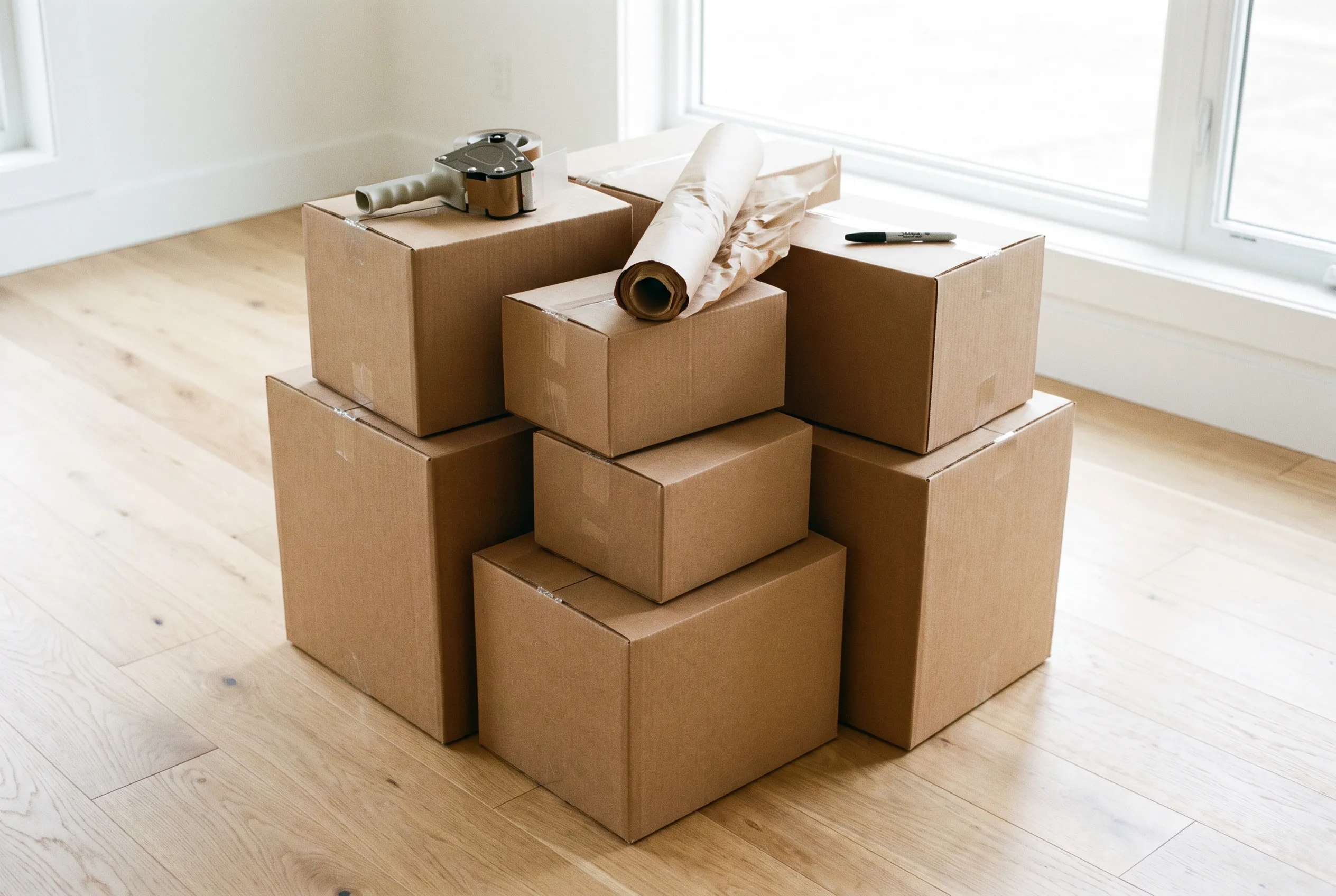
- Packing tape. Buy more than you think, and get the real thing. Cheap tape peels off in the cold, and a box that pops open in transit is how things break. Two or three rolls of quality tape and a tape gun make the whole job faster.
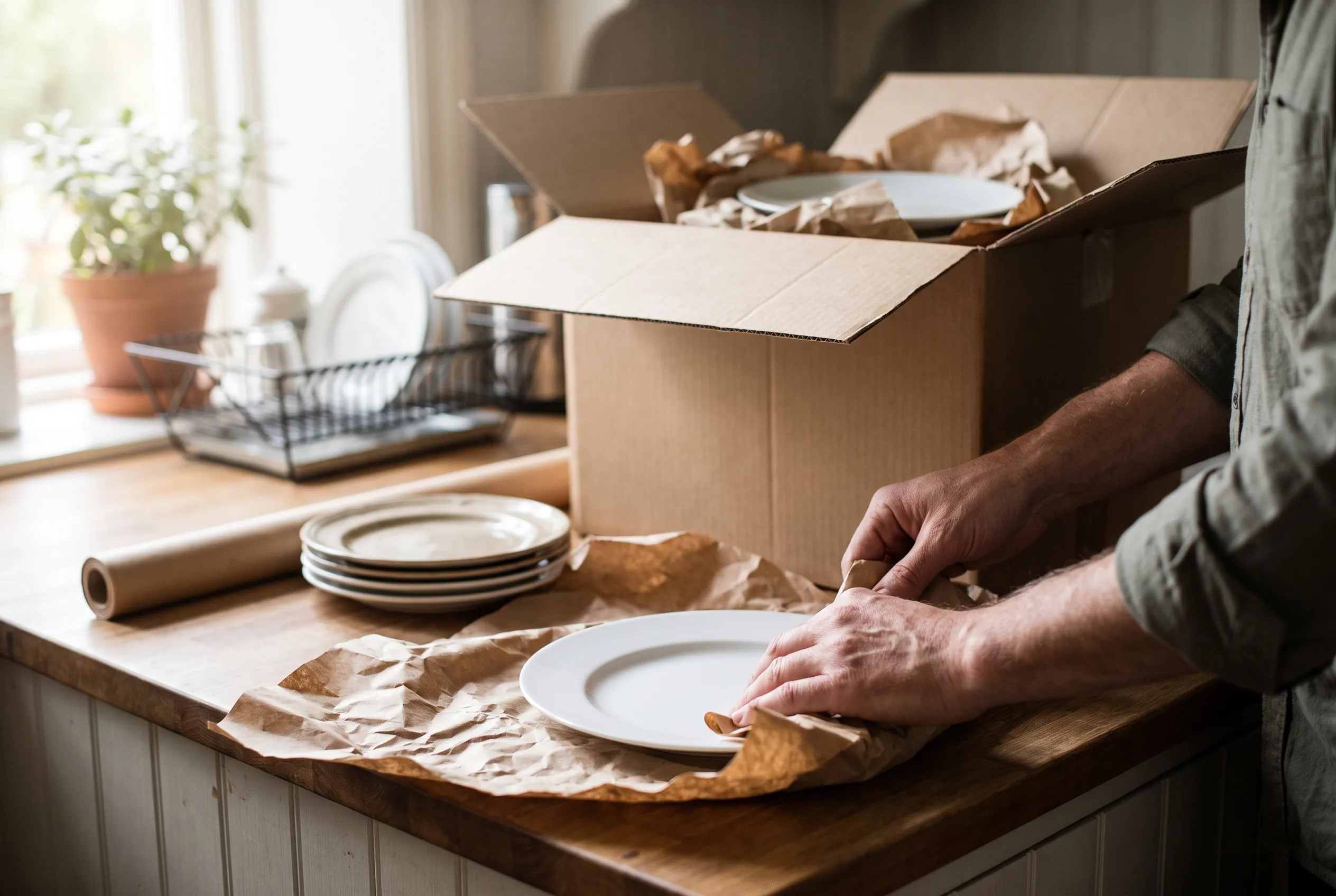
- Packing paper. Plain newsprint (unprinted, so no ink on your dishes) is the workhorse. Use it to wrap dishes, fill gaps, and cushion glassware. A bundle goes further than you expect.
- Bubble wrap. Save this for the genuinely fragile stuff: stemware, ceramics, electronics, framed photos. You do not need to bubble-wrap the whole house.
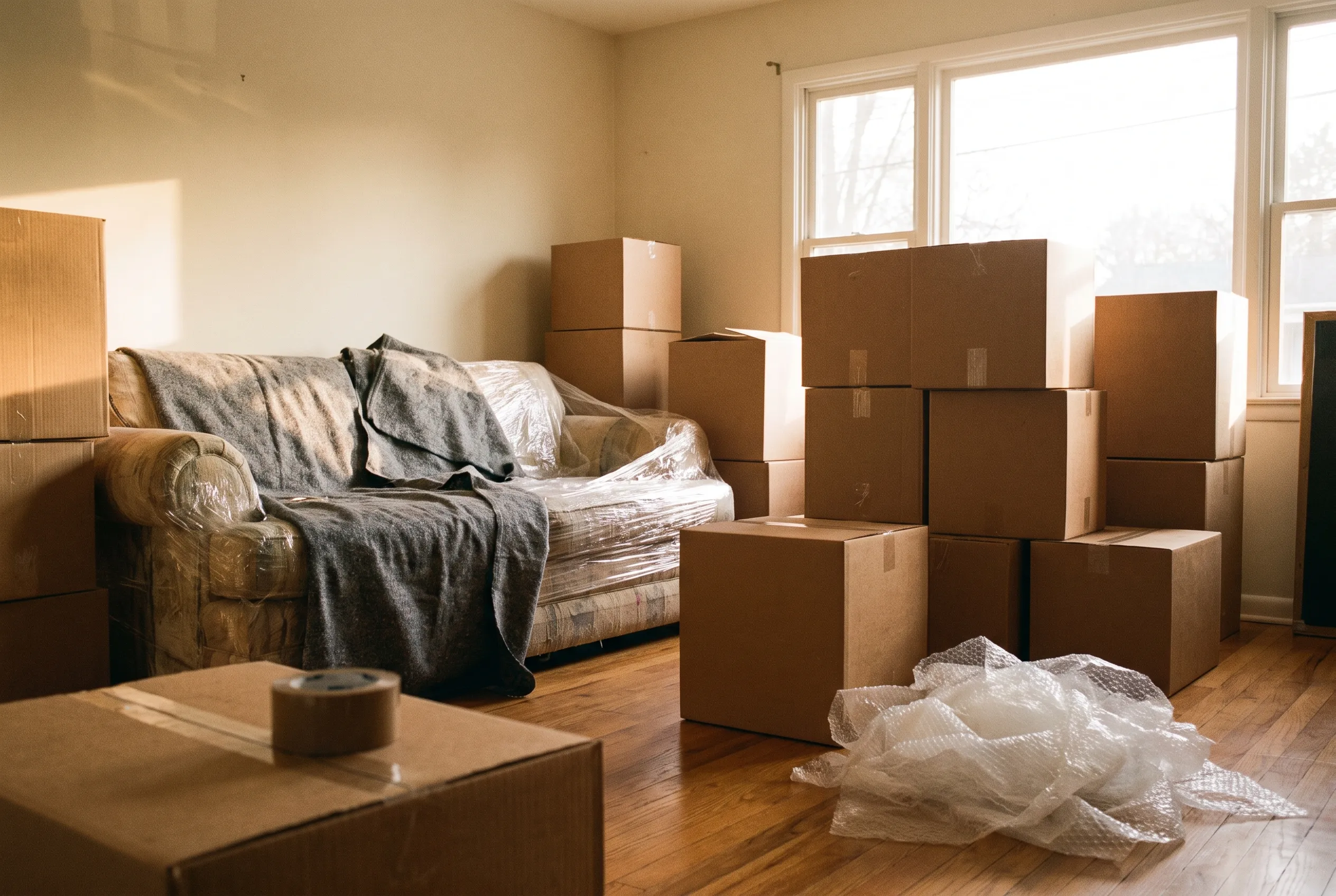
- Stretch wrap. A big roll of plastic stretch film keeps dresser drawers shut, bundles awkward items, and protects upholstery. It is one of those things you never regret buying.
- Furniture pads or moving blankets. These protect table edges, headboards, and cabinet fronts. When we handle a move, our crew brings professional pads and does this for you, but if you are doing it yourself, rent or buy a few.
- Mattress bags. A few dollars each, and they keep your mattress clean and dry on the truck. Cheap insurance, especially in a wet Spokane spring.
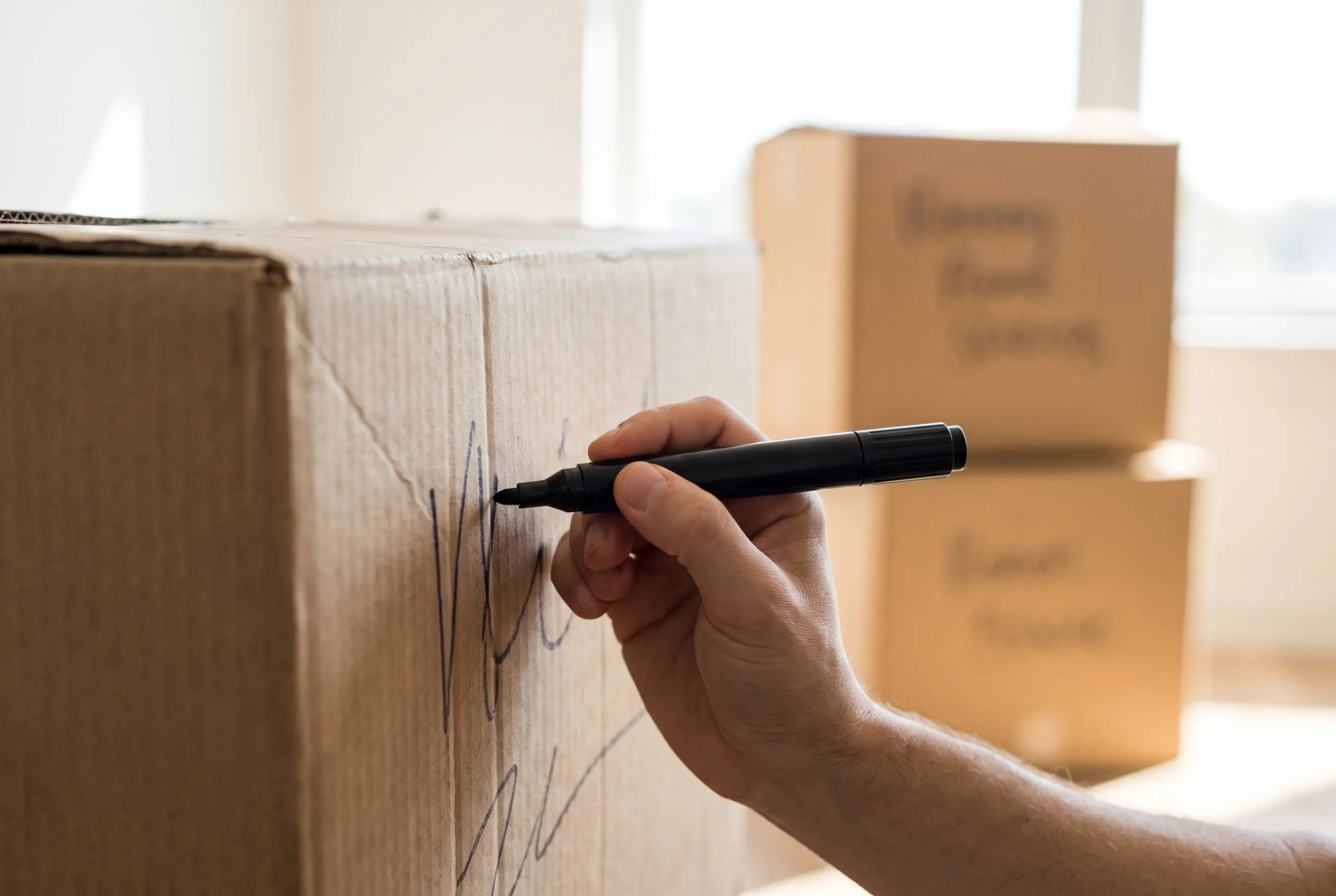
- Markers and labels. A couple of thick markers so every box gets a room and a one-line note. Label the side, not just the top, so you can read it while boxes are stacked.
Skip the things you will not miss. You rarely need color-coded label kits, foam peanuts (paper does the same job with less mess), or a box for every single size on the shelf.
How many boxes will you actually need?
This is the question everyone asks, and the honest answer is that it depends on how much you own and how you live. A minimalist one-bedroom and a packed-to-the-rafters one-bedroom are not the same job. Still, you need a starting point, so here is a realistic range by home size.
| Home size | Small | Medium | Large | Wardrobe |
|---|---|---|---|---|
| Studio / 1 bed | 10–15 | 8–12 | 5–8 | 2–3 |
| 2 bedroom | 15–25 | 12–20 | 8–12 | 3–5 |
| 3 bedroom | 25–40 | 20–30 | 12–18 | 4–6 |
| 4+ bedroom | 40–60 | 30–45 | 18–25 | 6–10 |
Two things shift these numbers. Books, tools, and collections push your small-box count way up, so add more if you own a lot of either. And the longer you have lived somewhere, the more you have accumulated, so a home you have been in for fifteen years will always need more boxes than the chart suggests.
A good habit: buy about 80% of your estimate up front, then grab the last batch a few days in once you can see how packing is going. Many stores and moving suppliers will take back unused boxes, so ask about the return policy before you buy. It beats running short.
New, used, or free?
You have three ways to get boxes, and the right answer is usually a mix.
New boxes are uniform, clean, and strong, which matters most for heavy items, dishes, and anything you are shipping a long way. They stack evenly on the truck, so they load faster and safer.
Free or used boxes from grocery stores, friends, or online marketplaces are fine for lightweight, non-fragile things like towels, shoes, and pillows. Just check that they are dry, clean, and still sturdy. A box that has been damp or crushed once will not hold up under weight.
Reusable plastic bins are great for the stuff you unpack first and for anything you want to keep sealed against moisture. They cost more, but you use them for years.
If you would rather not source any of it, we sell sturdy moving boxes and packing supplies in the same grades our crews trust, so you can get exactly what your home needs in one stop. And if packing itself is the part you dread, our packing and unpacking service handles the boxing, wrapping, and labeling for you.
A simple plan for getting it right
If you remember nothing else, remember this: heavy in small boxes, light in large, real tape, and label every box on the side. Get wardrobe boxes for the closets and dish barrels for the kitchen. Buy most of what the chart suggests, then top off near the end.
Whether you are moving across the street in Spokane or across the state, the right supplies make the day faster and safer for everyone. If you want a hand mapping it all out, our ultimate moving checklist walks through the full timeline, and our guide to what movers cost in Spokane helps you plan the budget.
Ready for a plan built around your actual home? Reach out for a free quote or call us at (509) 862-4968, and we will help you figure out exactly what you need.
Planning a move in the Spokane area?
Get a free, no-obligation quote from a licensed local crew.