How to Prepare Your Home for the Movers
Here is a small fact that saves people real money: on a local move, the clock usually starts when the truck parks and stops when the last box is off. That means the two hours you spend the night before, and the twenty minutes you spend the morning of, come straight off the bill. A home that is ready to load is a home a crew can move through without stopping to ask questions or wait on you to finish taping a box.
We have loaded more than a thousand homes around Spokane, and the fast moves almost always look the same at the door. Boxes closed and stacked. A clear path from the front rooms to the curb. Somebody who can point and answer instead of pack. None of it is hard. It is just a matter of doing it the night before instead of the morning of, when the truck is already idling out front.
The night before: get everything to a grab-and-go state
The goal for the evening before is simple. When the crew walks in, every box should be a box they can pick up and carry. Nothing half-open, nothing still being filled.
- Finish and close every box. Tape the bottoms and the tops. An open box cannot be stacked, and a crew will not carry a loose one for fear of spilling it. If you are still racing the clock on the last rooms, that is exactly what a professional packing crew is for, and a quick call the day before beats a frantic morning.
- Label the top and one side of each box with the room it goes to. This is the single biggest time-saver on the unload, because the crew can place boxes without asking. Add a little extra detail on anything fragile, because that is what pays off when you unpack.
- Pull your essentials box out of the pile. Medications, chargers, a change of clothes, important documents, the coffee maker. Set it in a closet or your car and tell everyone it does not go on the truck. Losing your phone charger inside a wall of identical boxes is a rough first night in a new place.
- Empty and defrost the fridge and freezer if either one is moving. A wet, dripping appliance cannot go on the truck, and a full one is dangerously heavy.
- Take apart what you can, or decide not to. Bed frames, table legs, and cheap shelving come apart quickly and load flat. Keep the screws in a labeled bag taped to the piece. If a bed or a big table is beyond you, leave it and tell the crew, since taking furniture apart and putting it back together is part of the job. Do not guess with anything you would hate to break.
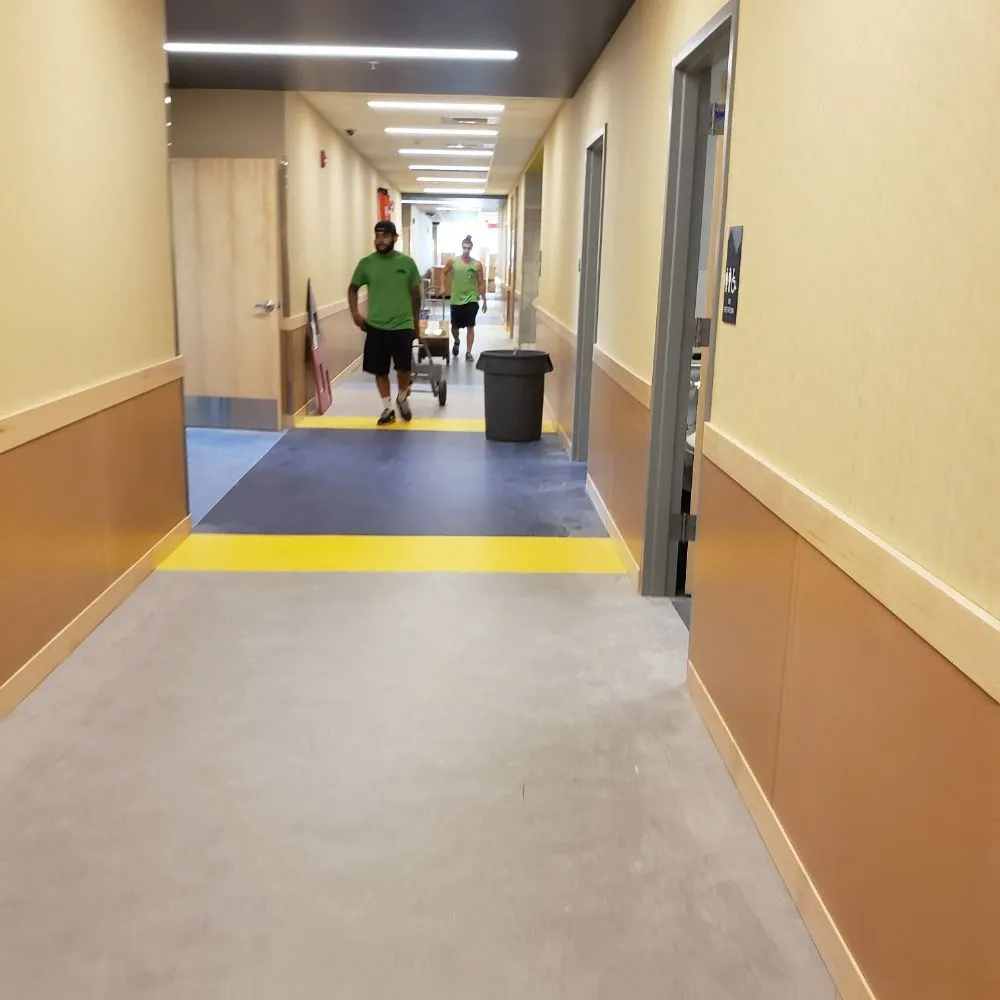
- Clear the pathways. Walk the route from your back bedrooms to the front door, then from the door to where the truck will sit. Move anything a person carrying a dresser would trip over. Runners, shoes, the dog gate, low furniture in a hallway.
Morning of: clear the runway
By morning the packing is done, so the job is all about access. A crew moves as fast as the path lets them.
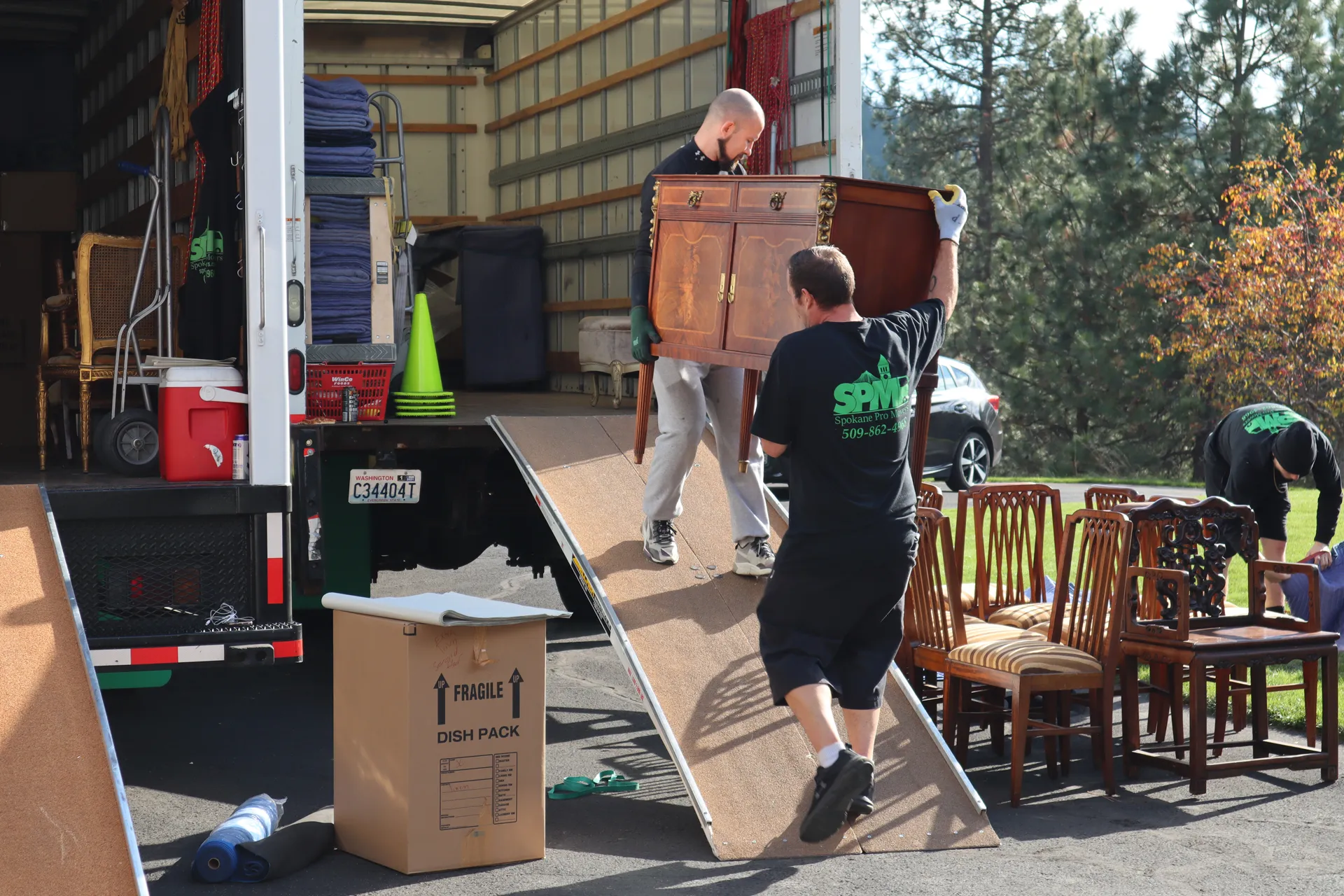
Start with the truck. Where will it park, and is that spot open? On the older streets in Spokane and the tighter setups around apartments, a spot right at the door can save dozens of trips across a lawn or a parking lot. Move your own cars out of the driveway before the crew arrives, and if you share a lot or an alley, put a cone or a chair in the spot the night before.
Then walk the home with the lead mover for two minutes. Point out what goes and what stays, the pieces you are worried about, and anything heavy or awkward hiding in a basement or garage. That short walk answers most of the questions a crew would otherwise interrupt you to ask all morning.
A few more morning-of items that keep things moving:
- Have a plan for kids and pets. A closed room, a sitter, or a friend’s house. Open doors and a busy driveway are a bad mix, and a nervous dog underfoot slows everyone down.
- Do a final sweep of the easy-to-miss spots. Behind doors, the top shelf of the closet, the medicine cabinet, the shed, the freezer. These are the things that get left behind.
- Keep phones charged and a few small bills handy in case you want to tip, though that is always your call and never expected.
- Leave the heavy lifting to the crew. You do not need to pre-stage boxes by the door. Two movers and one dedicated truck will build the load in the right order. Your job is a clear path and quick answers.
The quick version
If you only glance at one thing, make it this. Here is the split between what to handle the night before and what to save for the morning.
| Night before | Morning of |
|---|---|
| Tape and label every box | Move your cars, save the truck spot |
| Set aside the essentials box | Two-minute walkthrough with the lead |
| Defrost the fridge and freezer | Kids and pets settled elsewhere |
| Disassemble beds and tables (or flag them) | Final sweep of closets, shed, freezer |
| Clear the path to the door | Confirm the address and drop-off details |
A Spokane note on weather and access
Two local things are worth a thought. If you are moving in the colder months, ice on a walkway is the real hazard, so salt or shovel the path the night before and again at first light. We wrote more on that in moving during a Spokane winter. And if you are in a walk-up or a home with a long carry to the street, tell us when you book so the crew comes ready. A handful of smart moving-day habits smooth out almost every load.
The through line here is that a ready home protects your budget, because most local moves are billed by the hour and every clear path shaves time off the total. Do the boring prep, and the day takes care of itself.
When you are ready to lock in a date, get a free quote or call us at (509) 862-4968, and we will walk you through exactly what to have done before we pull up.
Planning a move in the Spokane area?
Get a free, no-obligation quote from a licensed local crew.